Run and study modern AI from the kernel upward.
C-Kernel-Engine turns model architecture into explicit circuits, numerical contracts, memory plans, selected CPU kernels, and generated C.
This is the consolidated entry point for the runtime, architecture, source, nightly parity evidence, contribution path, and current Intel CPU work.
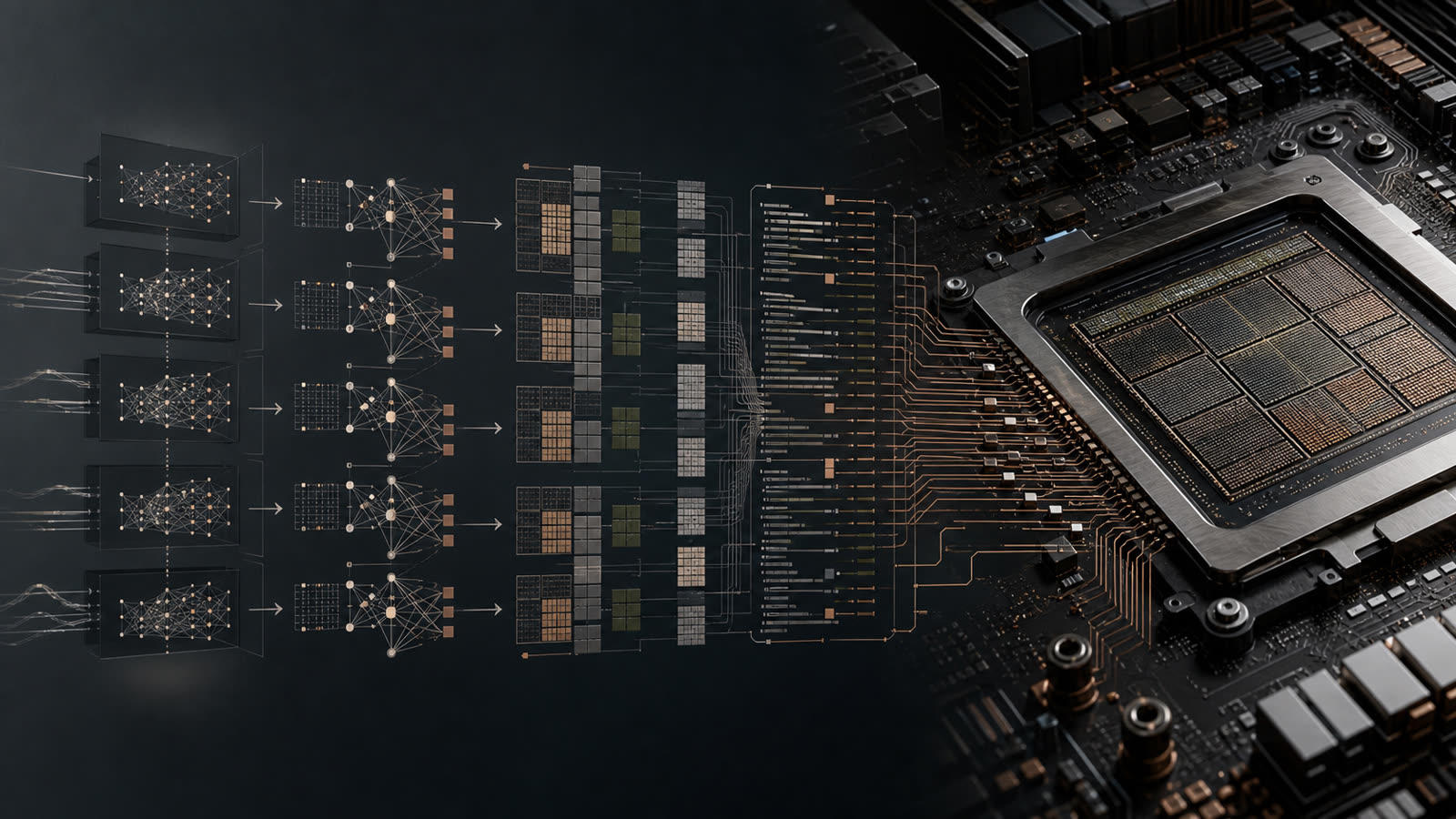
A checkpoint does not become fast, correct C by itself
CKE keeps each lowering decision inspectable rather than hiding the model behind one opaque framework call.
Checkpoint + metadata
Weights, tensor identities, dimensions, dtypes, and model configuration establish the concrete model.
Circuit template
The model family declares attention, normalization, MLP, recurrence, vision, audio, and routing structure.
Graph and lowered IR
Shapes, loops, dependencies, layouts, and execution phases become explicit compiler objects.
Kernel map
Operations resolve to real C kernels with dtype, reduction, layout, ISA, and numerical contracts.
Memory + pointer plan
Activations, KV state, workspaces, ownership, lifetime, and aliases are planned before execution.
Generated runtime
CKE emits native C that can be profiled, compared, and hardened on the target CPU.
A model becomes generated C through explicit contracts
Weights and circuit templates enter the lowering pipeline. Missing kernels, routes, or numerical contracts fail closed before generated code is accepted.

AI that fits where GPU-first stacks do not
CKE separates the generated program from the model weights and runtime state. That makes CPU deployment worth investigating when ownership, memory capacity, portability, or evidence matters more than peak accelerator throughput.
A small generated program
CKE lowers a model circuit into generated C while weights, KV state, and workspaces remain separate. The execution path is easier to inspect, profile, reproduce, and compare than a large general-purpose software stack.
Start with systems you own
CKE is relevant when GPU procurement, cloud policy, data residency, or deployment footprint blocks an experiment. Performance still depends on the model, quantization, memory bandwidth, ISA, and hardened kernel path.
Fit can matter more than peak FLOPs
Server CPUs can expose large memory capacities and many memory channels. That matters when model weights or KV state cannot economically fit accelerator memory, provided the resulting bandwidth and latency still satisfy the workload.
Find the first wrong operation
Use CKE when plausible output is not enough. Explicit circuits, selected providers, numerical contracts, and X-Ray checkpoints connect a model result to a concrete generated-C execution path.
Scale only after one path is proven
Current evidence is strongest on single-node CPU execution. Distributed CPU inference and training are active research directions, not finished capabilities presented as production results.
Use the stack that meets the contract
If an accelerator runtime already meets cost, latency, ownership, and audit requirements, use it. CKE helps when CPU deployment, inspectability, model bring-up, numerical parity, or portability is the binding constraint.
Architecture, validation, source, and collaboration
External technical artifacts open separately; the product explanation remains on Antshiv Robotics.
From circuits to generated C
See templates, IR stages, kernel contracts, memory planning, and runtime structure.
Model × kernel support
Inspect which model families and execution paths are implemented or still gated.
Public nightly validation
Pinned references, parity lanes, regressions, and current failures define what the code proves.
Repository and engineering history
Read the generated runtime, kernels, tests, pull requests, and commit evidence.
Reproduction before patch size
Platform findings, numerical oracles, kernels, documentation, and small portability fixes all matter.
Bring a bounded CPU AI problem
Model bring-up, parity, performance, education, and hardware validation begin with an explicit question.
Why CKE belongs on modern server-grade CPUs
Large models need more than peak arithmetic. Server platforms combine memory capacity, bandwidth, cache, vector and matrix execution, mature Linux tooling, storage, and high-speed networking in one expandable system.
More channels, capacity, and LLC
Multi-channel DDR5 feeds bandwidth-bound kernels, large memory capacities hold more weights and KV state, and larger last-level caches reduce repeated trips to DRAM when locality is planned well.
More cores and stable SIMD
AVX2 provides a broad x86 baseline. AVX-512, VNNI, and Intel AMX BF16 can increase useful arithmetic density when packing, thread scheduling, and numerical behavior are hardened for the exact processor.
Storage, DSA, RDMA, and PCIe
Fast SSD tiers can extend model capacity, Intel DSA can offload suitable memory movement, and RDMA-capable NICs can move data between nodes without routing bulk payloads through ordinary CPU copy loops.
Topology and measurement are visible
NUMA domains, memory channels, LLC behavior, PMU counters, perf, VTune, and standard Linux interfaces make the complete bottleneck chain inspectable rather than reducing performance to one accelerator number.
One node can become a cluster
Memory, NVMe, NICs, and additional CPU nodes can be added independently. That makes tensor, pipeline, and phase-separated execution a practical long-term CKE research path.
Capabilities are platform-specific
AMX and DSA are Intel-specific examples; RDMA depends on the NIC and fabric. CKE only claims an optimization after the relevant ISA, topology, compiler, and hardware lane has been measured.
What exists now, and what remains work
Roadmap language is not presented as measured capability.
Source and evidence
The repository, docs, nightly results, and engineering history are publicly inspectable.
Reuse terms remain explicit
CKE currently documents contribution and licensing context, but has not declared a conventional root reuse license.
No universal speed claim
A result applies only to its model, phase, dtype, ISA, thread count, compiler, and hardware.
Training and clusters
Bounded training exists; broad distributed execution remains planned research.

Antshiv Robotics builds intelligent systems we can understand all the way down, from mathematical kernels and CPU runtimes to simulation, flight control, and autonomous machines.